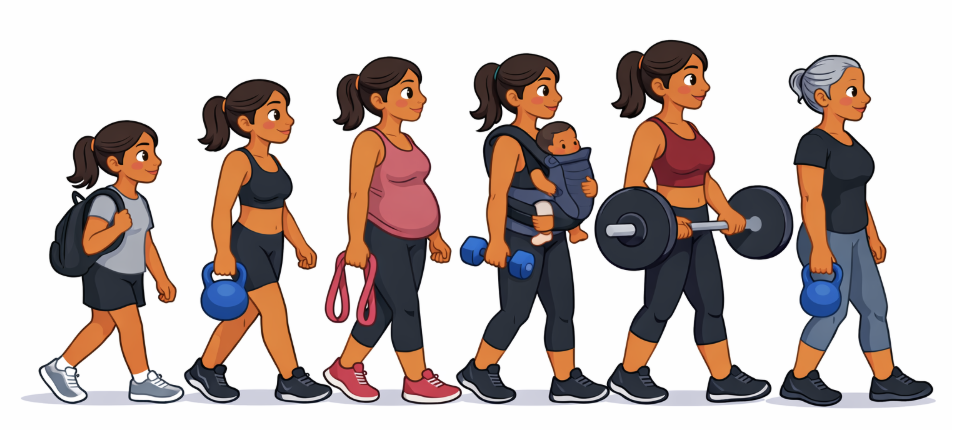
Women’s training advice online can sometimes make it sound as though every life stage requires an entirely new rulebook.
Hormones fluctuate, physiology shifts and different life stages bring new considerations. But according to clinicians working closely with female athletes, the core principles of good training remain remarkably consistent.
Strength training, cardiovascular activity, adequate recovery and proper nutrition form the foundation of long-term health and performance. These fundamentals—lifting regularly, fuelling well, prioritising sleep and reducing sedentary behaviour—continue to matter whether someone is in their twenties, postpartum or navigating perimenopause.
When Adjustments Matter
That doesn’t mean physiology is irrelevant. Certain life stages, particularly pregnancy and postpartum, require more individualised guidance and careful modifications.
For some women, tracking the menstrual cycle may also provide useful insight. Hormonal fluctuations can influence energy levels, recovery and potentially injury risk. Adjusting training intensity during symptomatic phases may help some individuals train more effectively.
However, not every woman experiences noticeable changes across the cycle. For many, rigid “cycle syncing” protocols promoted online may add unnecessary complexity rather than meaningful benefit.
The key principle remains simple: listen to your body first, and use technology or tracking tools as supportive information—not strict instructions.
Avoiding the Extremes
One of the biggest challenges in women’s training advice is the tendency toward extremes.
On one side are generic, one-size-fits-all programmes that ignore individual physiology. On the other are highly specialised protocols that portray women as fragile or dependent on complex supplements and highly specific routines.
In reality, the most effective approach sits between the two. General lifestyle and training principles form the base, while individual symptoms and life-stage considerations guide adjustments where needed.
Beyond Physiology: The Real Barriers
Improving women’s long-term health through exercise is not only a physiological challenge—it is also structural.
Dropout rates in physical activity often rise during key life transitions such as puberty, pregnancy, postpartum and menopause. Barriers range from lack of education about menstrual health to limited access to childcare, supportive facilities and knowledgeable coaching.
Addressing these gaps may be just as important as refining training protocols themselves.
This article summarises a recent newsletter exploring training across life stages, hormonal changes and the structural barriers that influence women’s long-term participation in physical activity.
Read the full newsletter here