Author: Tifanny Ediomo

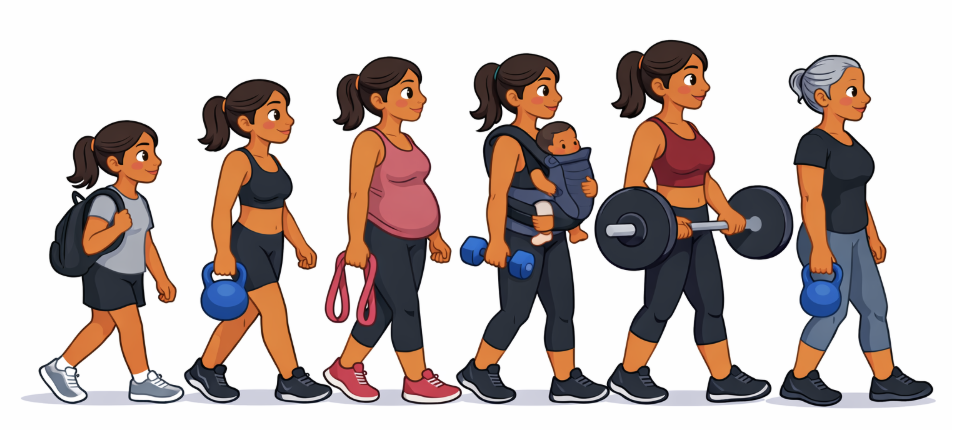
  • Training Across Life Stages: Do the Fundamentals Really Change?

    Training Across Life Stages: Do the Fundamentals Really Change?

    Women’s training advice online can sometimes make it sound as though every life stage requires an entirely new rulebook.

    Hormones fluctuate, physiology shifts and different life stages bring new considerations. But according to clinicians working closely with female athletes, the core principles of good training remain remarkably consistent.

    Strength training, cardiovascular activity, adequate recovery and proper nutrition form the foundation of long-term health and performance. These fundamentals—lifting regularly, fuelling well, prioritising sleep and reducing sedentary behaviour—continue to matter whether someone is in their twenties, postpartum or navigating perimenopause.


    When Adjustments Matter

    That doesn’t mean physiology is irrelevant. Certain life stages, particularly pregnancy and postpartum, require more individualised guidance and careful modifications.

    For some women, tracking the menstrual cycle may also provide useful insight. Hormonal fluctuations can influence energy levels, recovery and potentially injury risk. Adjusting training intensity during symptomatic phases may help some individuals train more effectively.

    However, not every woman experiences noticeable changes across the cycle. For many, rigid “cycle syncing” protocols promoted online may add unnecessary complexity rather than meaningful benefit.

    The key principle remains simple: listen to your body first, and use technology or tracking tools as supportive information—not strict instructions.


    Avoiding the Extremes

    One of the biggest challenges in women’s training advice is the tendency toward extremes.

    On one side are generic, one-size-fits-all programmes that ignore individual physiology. On the other are highly specialised protocols that portray women as fragile or dependent on complex supplements and highly specific routines.

    In reality, the most effective approach sits between the two. General lifestyle and training principles form the base, while individual symptoms and life-stage considerations guide adjustments where needed.


    Beyond Physiology: The Real Barriers

    Improving women’s long-term health through exercise is not only a physiological challenge—it is also structural.

    Dropout rates in physical activity often rise during key life transitions such as puberty, pregnancy, postpartum and menopause. Barriers range from lack of education about menstrual health to limited access to childcare, supportive facilities and knowledgeable coaching.

    Addressing these gaps may be just as important as refining training protocols themselves.


    This article summarises a recent newsletter exploring training across life stages, hormonal changes and the structural barriers that influence women’s long-term participation in physical activity.

    Read the full newsletter here

  • The Real Cost of Under-Fuelling: Understanding RED-S in Women

    The Real Cost of Under-Fuelling: Understanding RED-S in Women

    Under-fuelling is one of the most overlooked threats to women’s health and performance.

    Often discussed only in elite sport, Relative Energy Deficiency in Sport (RED-S) is increasingly recognised as a far broader issue—affecting recreational exercisers, active women and athletes alike. At its core, RED-S occurs when the body does not receive enough energy to support both daily functioning and physical output.

    When this happens, the body begins to prioritise essential systems for survival. Reproductive function is often the first to be affected, which is why menstrual disruption—irregular cycles or missed periods—is one of the earliest warning signs.

    But the impact of RED-S extends far beyond menstrual health.


    More Than a Performance Issue

    RED-S was formally defined in a 2014 consensus statement by the International Olympic Committee as a condition that can affect multiple body systems, including bone health, metabolism, cardiovascular health, immune function and psychological wellbeing.

    For athletes, under-fuelling is not always intentional. Many simply underestimate how much energy their training requires. The same dynamic can occur in the general population, where the long-standing message of “eat less, move more” often leads women to restrict calories while increasing exercise.

    Over time, this mismatch between energy intake and expenditure can lead to fatigue, declining performance, increased injury risk and hormonal disruption.


    Recognising the Warning Signs

    The early signals of RED-S are often subtle but important:

    1. Increased injury rates, particularly stress fractures
    2. Irregular or absent menstrual cycles
    3. Persistent fatigue
    4. Frequent illness due to reduced immune function
    5. Mood changes or reduced motivation
    6. Performance plateaus despite consistent training

    These symptoms are not minor inconveniences. They are indicators that the body may be operating in a state of chronic energy deficit.


    The Long-Term Health Implications

    Emerging research is also highlighting the potential long-term consequences of under-fuelling.

    Bone health is one of the most significant concerns. When energy availability is too low, hormonal changes—particularly reduced oestrogen—can impair bone formation and increase bone loss. Over time, this may lead to reduced bone mineral density and an increased risk of fractures, sometimes decades later.

    There is also growing evidence that prolonged energy deficiency during critical developmental periods may influence reproductive health, including egg quality and fertility outcomes later in life.


    A Lifespan Issue

    Although often associated with elite athletes, the risk of RED-S appears across many stages of a woman’s life.

    • Adolescence: During puberty, when bone mass is developing rapidly, energy restriction can have lasting consequences.
    • Postpartum: Recovery from childbirth and breastfeeding significantly increase energy needs, particularly for women returning to training.
    • Perimenopause: Hormonal shifts and body composition changes may prompt calorie restriction and increased exercise, potentially exacerbating energy deficiency.

    Across each stage, the underlying pattern is similar: changes in the body lead women to reduce food intake while increasing activity, creating an energy gap that the body cannot sustain.


    Shifting the Conversation

    Awareness of RED-S is growing, particularly in sports medicine and athlete health. Increasingly, athletes are seeking proactive assessments of their menstrual health and energy availability, recognising that performance and long-term wellbeing are closely connected.

    This shift represents important progress. However, the conversation needs to extend beyond elite sport to reach the wider population of active women.


    A Simple but Essential Principle

    The fundamentals are straightforward but often overlooked: the body requires adequate energy to support both health and performance.

    For women who train, compete or simply lead active lives, fuelling appropriately, monitoring menstrual health and seeking early support when symptoms arise are key steps toward protecting long-term wellbeing.

    Greater awareness of RED-S is helping to reshape how we think about training, nutrition and women’s health across the lifespan.


    This article is a summary of a recent newsletter exploring the topic in greater depth, including clinical insights and lived experiences around RED-S and women’s health.

    Read the full newsletter here: Read